estimated visitors
Project overview · 2 MIN READ
Visualizer Stream: A Playback Engine That Listens to the Music
A visual library becomes a responsive instrument when analysis and playback share musical intent.
Give the music something worth watching
A shuffled folder of videos can surprise you, but it cannot explain why a clip belongs with the music. Visualizer Stream brings media analysis and live playback together so the next visual can reflect the track’s color, energy, and rhythm.
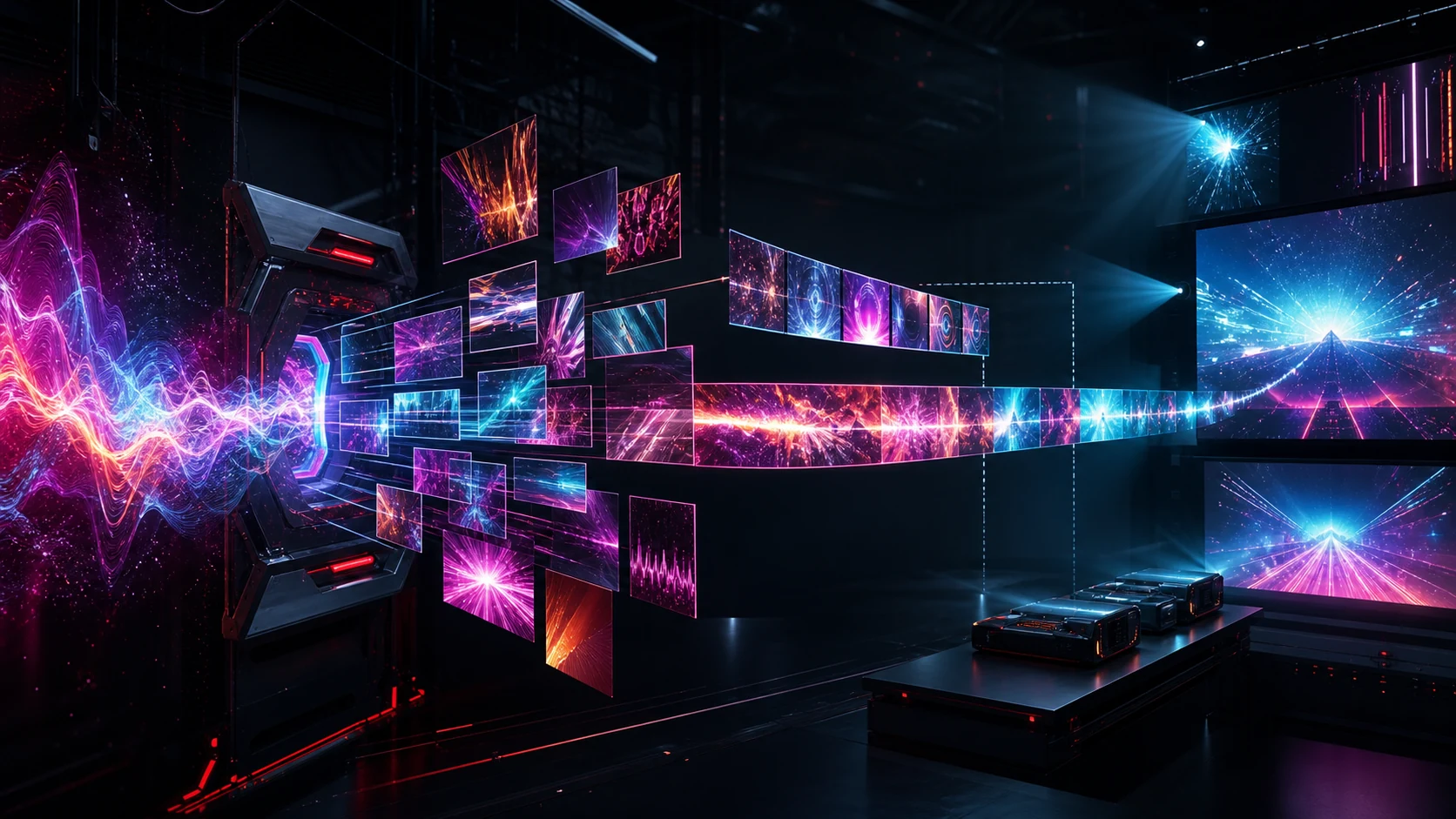
Concept illustration for visualizer-stream; not a product screenshot.
Build a vocabulary for visual material
The analysis layer samples video into windows and candidate segments, measuring palette, brightness, saturation, motion, intensity, cut behavior, and boundary quality. A visual-rhythm stage combines motion onsets, scene changes, and flashes to estimate tempo and confidence. The catalog can therefore describe not just what a file is, but how portions of it feel and move.
Music intent meets analyzed media
Analysis supplies a vocabulary; current music state supplies the intent used to choose from it.
flowchart TD
    Media[Video library] --> Segments[Analyzed segments]
    Segments --> Match[Rank eligible candidates]
    Music[Current music intent] --> Match
    Match --> Queue[Playback queue]
    Queue --> Stream[Continuous RTP output]
Match intent, then preserve continuity
Live music state supplies color, energy, tempo, and optional mood guidance. The matcher ranks analyzed candidates against that intent while accounting for quality, duration, audience policy, and recent selections. Explicit queue items still take priority, but autoplay can make informed choices when the operator hands control back to the system.
Playback sends a continuous H.264 RTP stream to render nodes while recording enough lifecycle and timing information to explain transitions. Show mode suspends expensive background work without suspending the performance. Together, those pieces turn a media library into a responsive visual instrument.
PROJECT