
estimated visitors
Project overview · 2 MIN READ
A Durable Home for Small Pieces of Work
F34 gives articles, media, files, and projects a quiet, durable home.
Give scattered work a home
An article here, a recording there, a project explained in three different places: small pieces of work are easy to publish and hard to keep together. F34 gives articles, images, audio, video, and files a shared catalog, with projects providing the context. The aim is a quiet archive that makes each piece easy to find and understand.
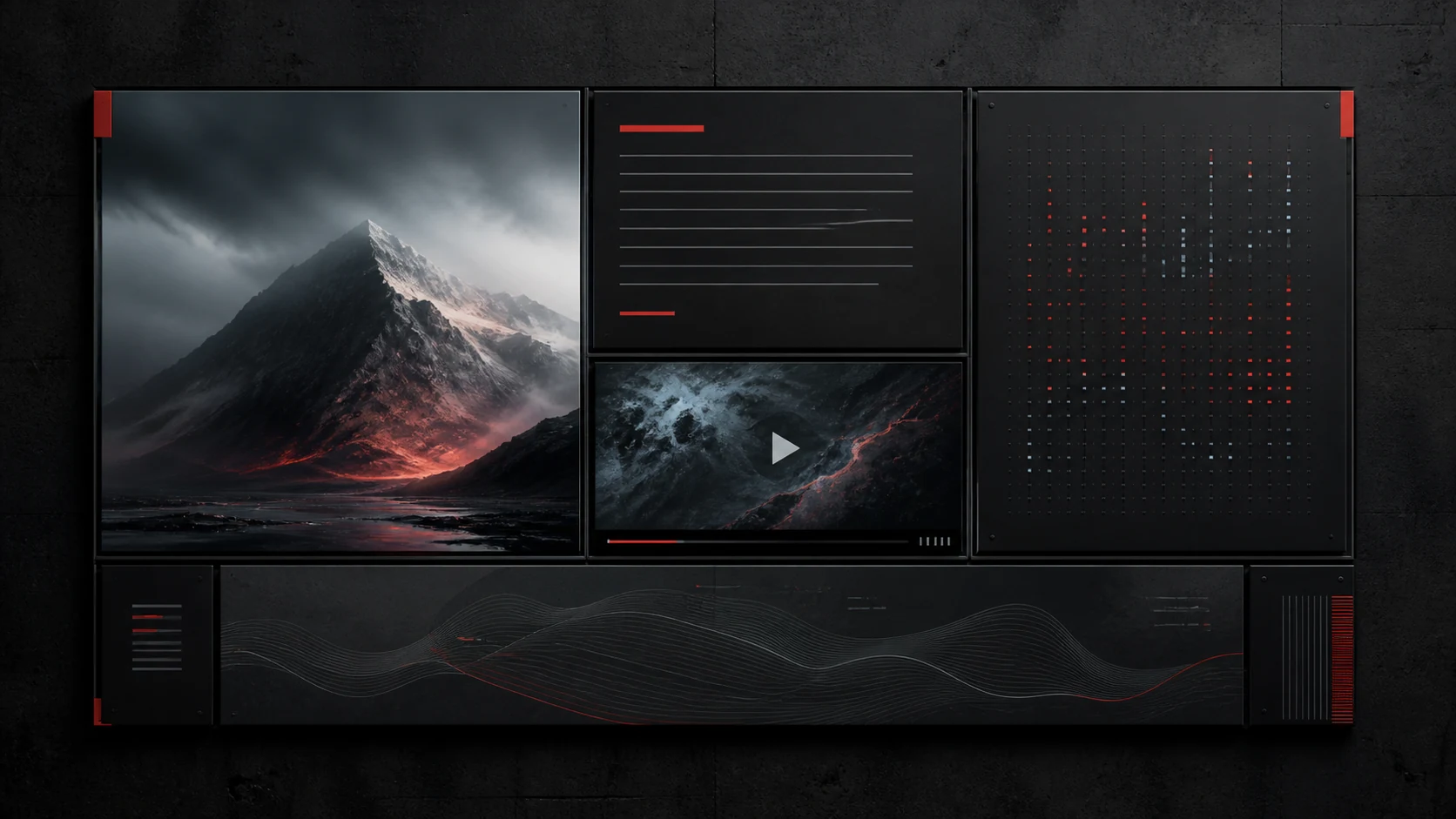
Concept illustration for f34; not a product screenshot.
One catalog, typed payloads
Each artifact begins with a shared catalog identity—title, author, date, description, and content type—but its actual payload belongs to a type-specific model. Article text remains article content; image dimensions and paths remain image data; audio, video, and files retain their own shapes. This creates a consistent catalog while letting every medium be rendered and handled according to what it actually is.
How a piece becomes part of a portfolio
An artifact keeps its own identity as projects and portfolios give it broader context.
flowchart TD
    Media[Article, image, recording or file] --> Catalog[Catalog item]
    Catalog --> Project[Curated project]
    Project --> Portfolio[Public portfolio]
Turn artifacts into a body of work
Projects sit above that catalog as curated workspaces. They can collect documentation, development notes, media, and resources into a coherent dossier without hiding the individual artifacts beneath them. Public portfolios reuse the same system at a larger scale, turning selected projects and published evidence into a scrollable exhibition that can be shared independently of an authenticated account.
The visual language follows the architecture. Project showcases are assembled from modular blocks whose arrangement responds to the public content available: a strong image can dominate, an article can provide context, an activity pulse can demonstrate momentum, and a summary band can hold the story together. When content is sparse, the composition remains intentional; when it is rich, F34 selects a bounded, readable presentation instead of displaying every possible widget.
PROJECT